By Portia Mao
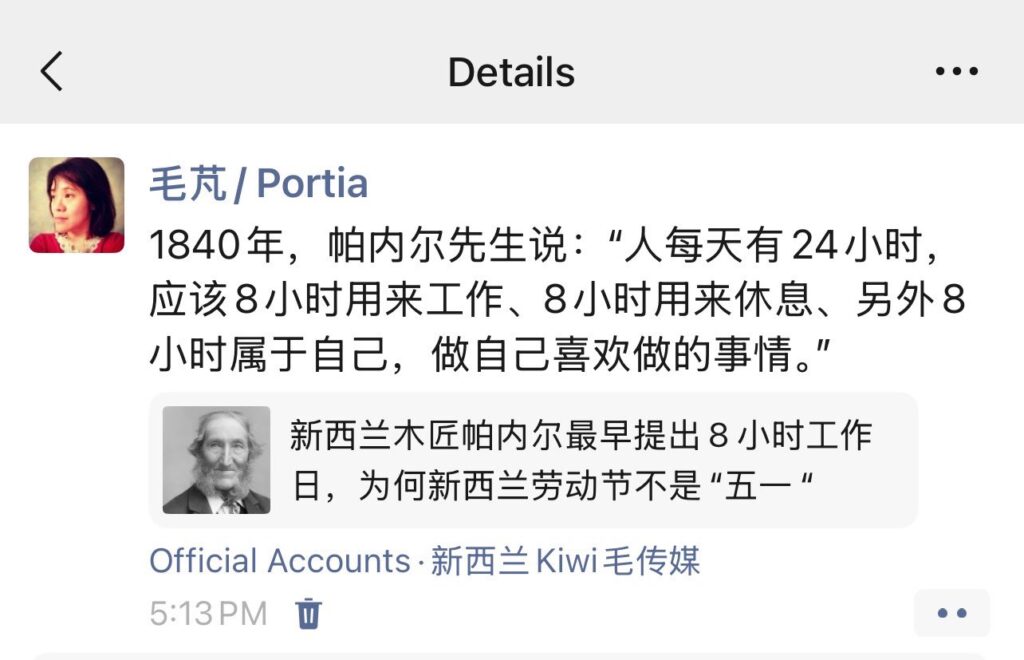
May 1st is known to Chinese people in mainland China as “International Workers’ Day”. over the weekend, I wrote a Labour Day article and published it on my WeChat account on Monday, paying tribute to Samuel Parnell—the New Zealand carpenter who championed the eight-hour workday in 1840.
However, within three hours of posting it on WeChat Moments—before I had even shared it to any WeChat groups—it was reported and removed.
–
–
This isn’t new. An opinion piece I wrote in 2022 was also taken down. It covered Chinese Kiwi reactions to Morgan Xiao’s candidacy in the local body election.
I have reason to believe the report likely came from someone within the local Chinese community. My Moments posts are not visible to users registered in China. In fact, many overseas Chinese face the same limitation: their family and friends back home cannot see their Moments posts.
Did I mention China in my article? Yes—but only briefly, at the very end, and in a positive context.
I noted that China introduceds “International Workers’ Day” in 1949 after PRC was established and formalised the eight-hour workday and 40-hour week in 1995 as part of broader economic transformation as it integrated into the global economy. The introduction of the two-day weekend reshaped urban life style, driving growth in consumer spending, tourism, and the service sector.
And yet, it was still removed.
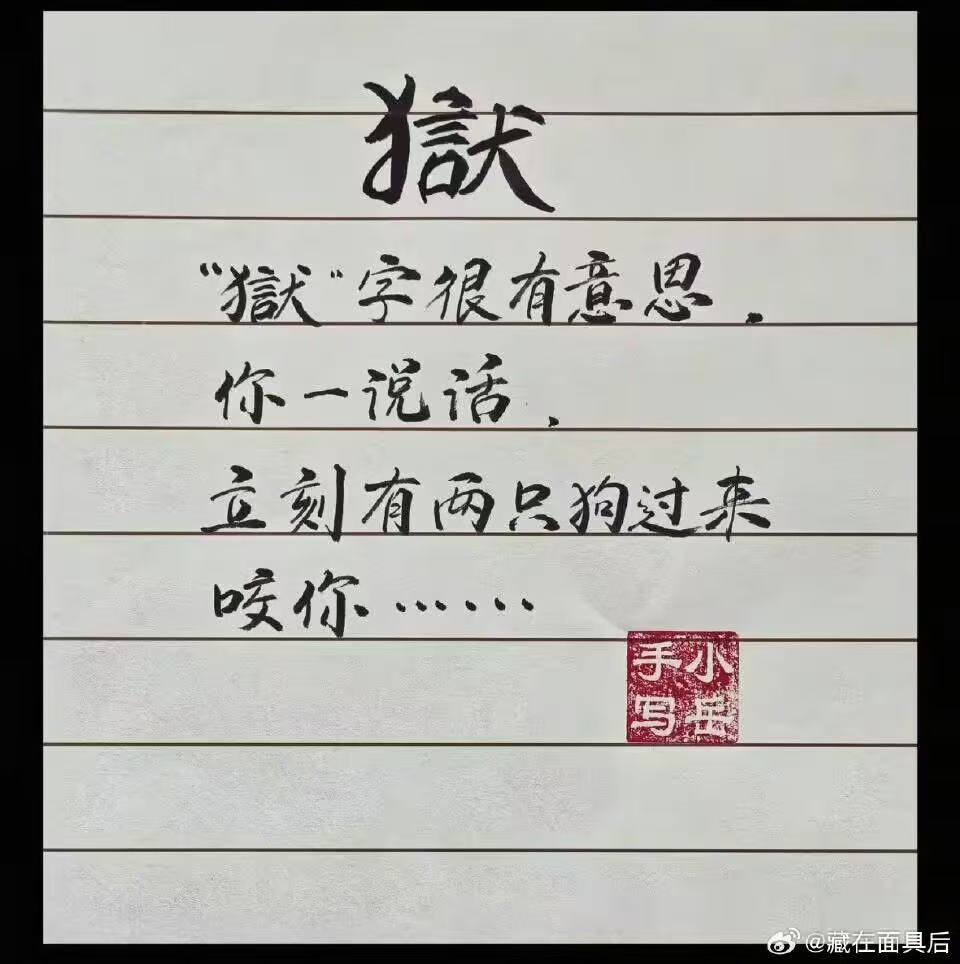
Interestingly, a reader shared an interpretation of the Chinese character “狱” (prison) today. As combines “speech” with two “dogs”—a vivid metaphor: the moment you speak, especially the truth, forces move quickly to silence you.
Some things don’t need much explanation.