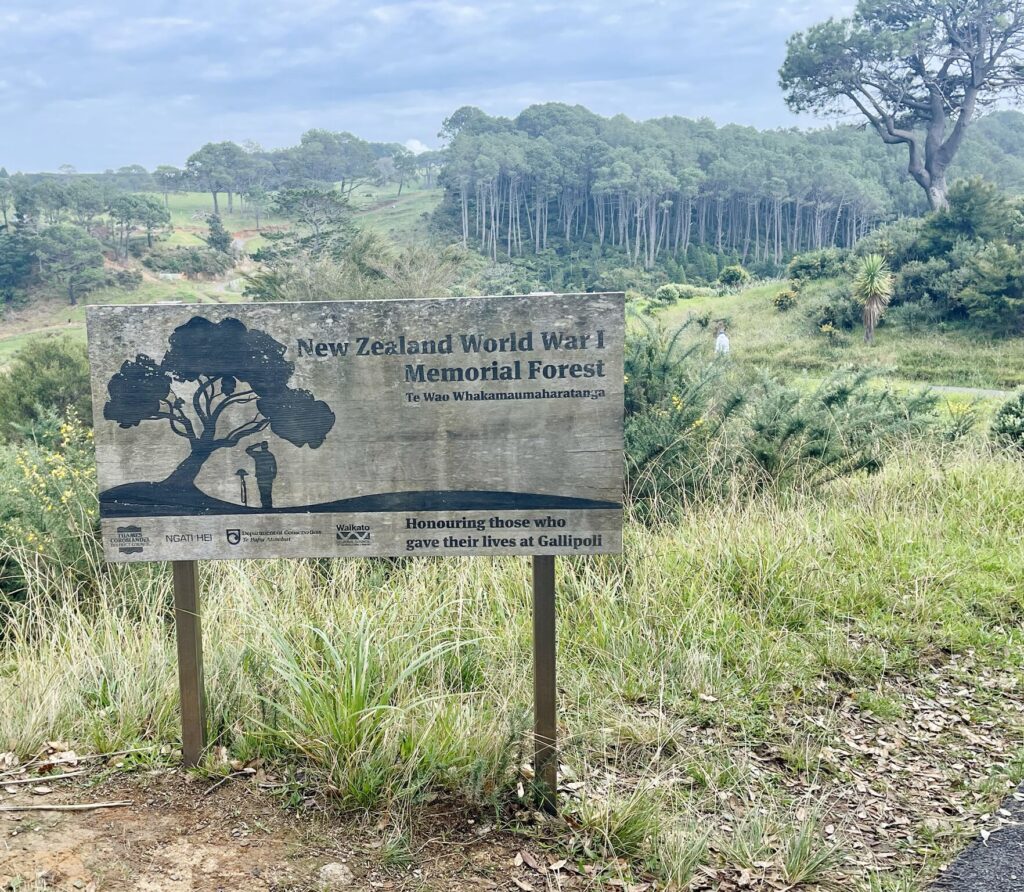
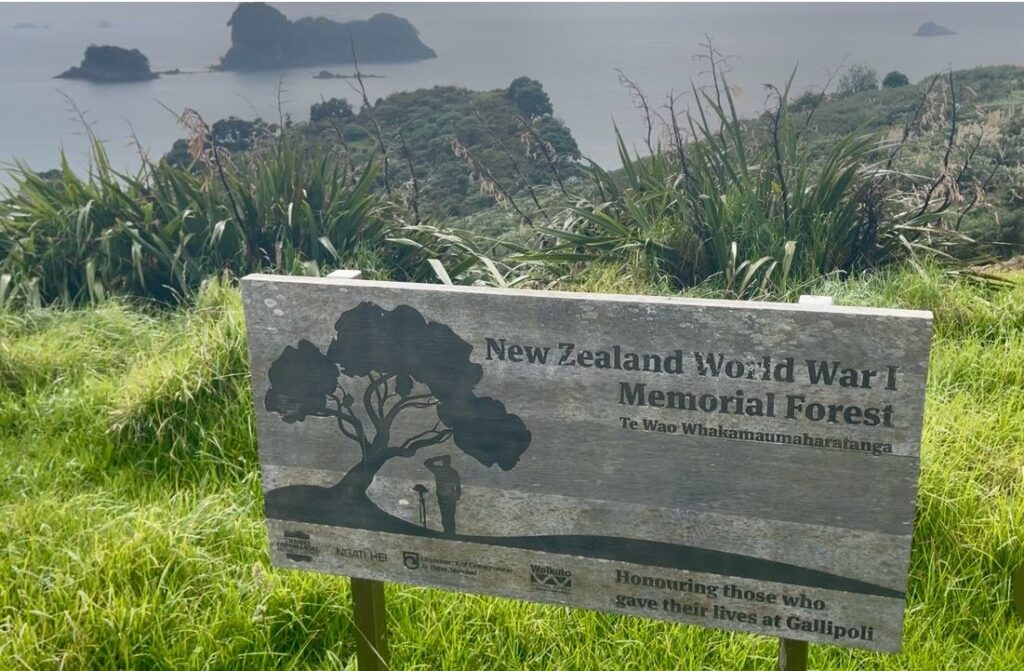
I hadn’t expected to come across two signs marking the New Zealand World War I Memorial Forest on my way to Cathedral Cove in the Coromandel Peninsula.
The forest, dedicated to the ANZAC soldiers, together with the surrounding beautiful and peaceful landscape, touched me deeply.
War remembrance matters. It reminds us not to forget those who sacrificed their lives amid the suffering and horrors of the battlefield. It also offers a moment to awaken strength, courage, and an unbreakable will.
The human spirit needs an element of steel and resolve—especially in today’s world, where peace, freedom, and democracy face mounting challenges.
This year marks New Zealand’s local government election year — a time when voters across the country exercise their democratic right to choose local representatives they trust to manage local affairs.
Yet in the Chinese community, specific individuals are already undermining that process. Instead of respecting open debate and fair competition, they have jumped in early, weaponizing political labels and smears to discredit potential candidates with the intent to interfere with and sabotage the democratic process.
Look at this screenshot — this is how someone who claims to be a PhD and a “Lifetime Fellow of the British Royal Academy (英国皇家终身院士) ” spoke.
Screenshot of Qiang Fu’s remarks in a WeChat group with 489 member.on April 16, 2025
“Got cancer? Got bald.”
“78 years old, in New Zealand — is he healthy?”
“Wearing a hat — what for? Hong Kong independence… Collaborating with Falun Gong to oppose China — there’s plenty of evidence.”
Mr. Qiang Fu was commenting on Peter Young, the current Auckland Howick Local Board (Botany subdivision) member, who is wearing a cap in the picture.
However, these are not political opinions — they are insults, rumours, and political frame-ups. Not only are they mean and malicious — even going as far as to curse someone’s health — but they also show blatant ageism and personal attack towards an older candidate.
What’s more malicious is that Mr. Fu baselessly accused Peter Young of being “pro-Hong Kong independence” and “anti-China”, simply because Mr. Young is a Hong Kong-born immigrant.
This is not an isolated case. It is not the first time that specific individuals have made reckless statements and attacked local candidates using Chinese political rhetoric during election season.
During the 2022 local elections, Morgan Xiao, known in the Chinese community as “Demon King”, suggested that Auckland councillor candidate Paul Young supported “Taiwan independence.”
In a WeChat article published on February 2, 2023, Xiao explicitly wrote: “Paul Young did indeed participate in and support a Taiwan independence activity.”
His evidence was that Paul had attended an event hosted by Auckland’s Taiwanese community in support of Taiwan joining the CPTPP. Xiao backed his claim by citing Chinese state media, arguing that “supporting Taiwan’s accession to the CPTPP has already been classified by China as an act of Taiwan independence.” Xiao even posted screenshots from official outlets under the “Taiwan Work Office of the CPC Committee” and the “Taiwan Affairs Office of the State Council” to reinforce his claim.
Screenshot from Morgan Xiao’s WeChat article on February 2, 2023
It is worth noting that both Fu and Xiao ran for Auckland City Councillor in the 2022 local elections.
Yet both have used Chinese political rhetoric to label and smear other candidates, spreading disinformation and misleading voters, though during different election years. Their rhetoric has polluted New Zealand’s electoral discourse and undermined the fairness and integrity of our democratic system.
It has also effectively served to divide the Chinese community and incite hatred.
In essence, they are exporting authoritarian logic into New Zealand and contaminating its democratic soil. What they spread is not opinion, but a desire for control — a hegemonic culture of “if you disagree with me, I will destroy you.” This poses a serious threat to the tolerance, diversity, and rationality that underpin New Zealand’s democratic society.
We must ask ourselves: What consequences will this toxic rhetoric bring to the Chinese community?
And more importantly, how should we, as decent Chinese Kiwis who genuinely regard New Zealand as our home, respond to such threats?