Hong Kong’s Jimmy Lai sentenced to 20 years in prison after landmark national security trial
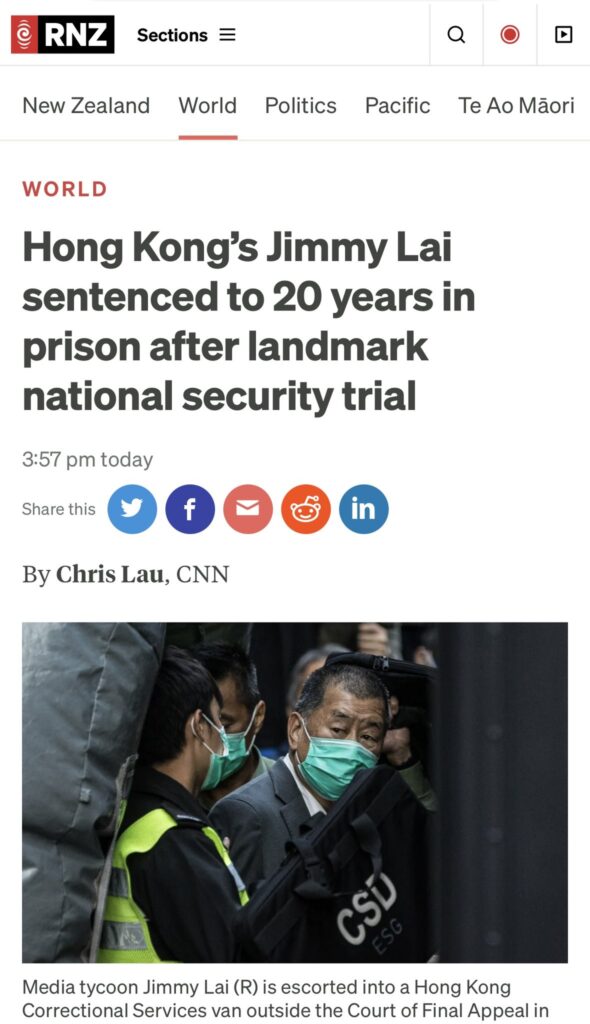
Media tycoon Jimmy Lai (R) is escorted into a Hong Kong Correctional Services van outside the Court of Final Appeal in Hong Kong on February 1, 2021, after being ordered to remain in jail while judges consider his fresh bail application, the first major legal challenge to a sweeping national security law Beijing imposed on the city last year. (Photo by AFP)Media tycoon Jimmy Lai (R) is escorted into a Hong Kong Correctional Services van outside the Court of Final Appeal in Hong Kong on February 1, 2021. Photo: AFP
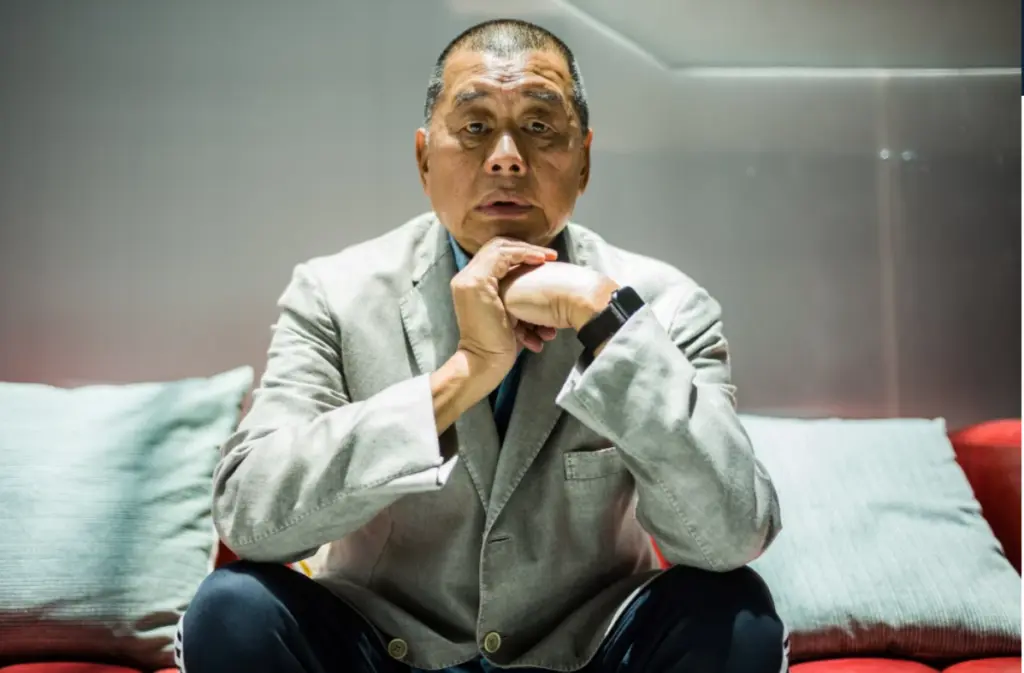
Former Hong Kong media tycoon Jimmy Lai has been sentenced to 20 years in prison, ending a years-long legal battle that has come to define Beijing’s transformational crackdown on the once-freewheeling financial hub.
The 78-year-old self-made billionaire was among the highest-profile government critics charged since Beijing imposed a sweeping national security law on the semi-autonomous southern city in 2020.
The lengthy sentence – Lai will not be eligible for parole until he is in his late 90s – will likely galvanise international calls for the media mogul’s release in the landmark trial closely watched by Western world leaders, including US President Donald Trump, who previously vowed to “get him out”.
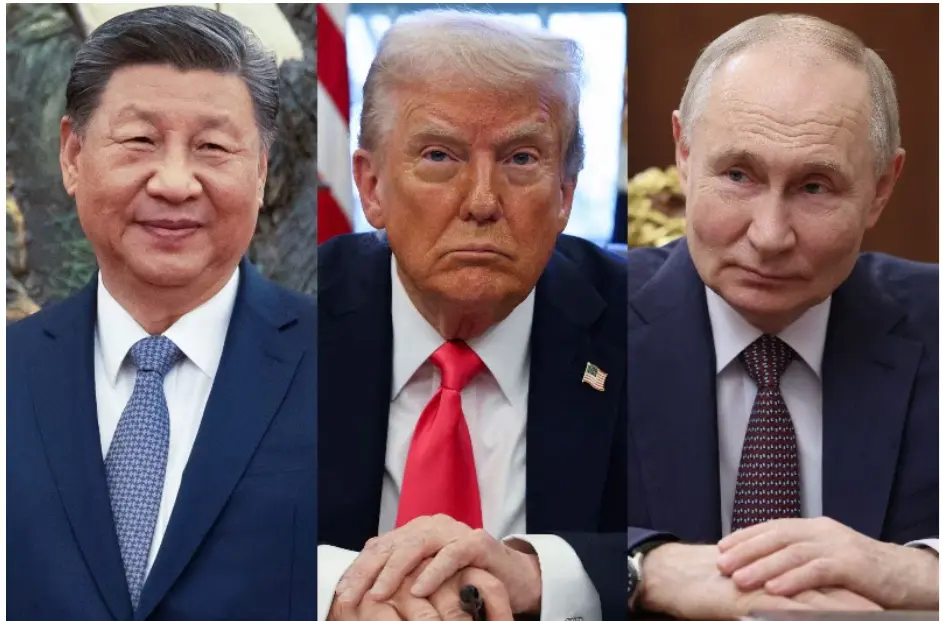
Trump is expected to travel to China in the coming months to meet his counterpart Xi Jinping and many of Lai’s supporters will be lobbying him to raise the jailed media mogul’s case.
Lai’s outspokenness over the Hong Kong’s shrinking freedoms – including to top US officials – and his role as the founder of now-defunct Apple Daily, a fiercely pro-democracy tabloid newspaper, had long made him a thorn in Beijing’s side.
He was found guilty of two national security charges and a sedition charge in December following a years-long court battle.
Lai, looking visibly slim in a white jacket, smiled slightly upon hearing the sentence Monday. Before the court session began, he had put his hands together to greet those sitting in the court gallery and turned to see six former Apple Daily colleagues who were also awaiting sentencing.
Those colleagues were jailed too, receiving sentences ranging from 6 years, 9 months to 10 years behind bars. Apple Daily and its affiliated companies were fined 6 million Hong Kong Dollars (US$767,000).
Both Beijing and Hong Kong’s government have repeatedly rejected international criticism of Lai’s prosecution and dismissed accusations that his jailing was politically motivated or an assault on press freedom.
Beijing’s national security law has transformed Hong Kong, with authorities jailing dozens of dissidents; forcing civil society groups and outspoken media outlets to disband; and neutering the city’s once-raucous political scene.
City and national authorities say their restrictions have “restored stability” following mass anti-government protests in 2019 that turned violent at times.
Supporters had been lining up for days outside the West Kowloon court since last week hoping to catch the last glimpse of Lai.
“He is the flag of Hong Kong,” Chan Chun-yee, 75, who arrived outside the court on Thursday, told CNN. “I don’t agree with everything he did but I aligned with his spirit and the things he pursued, such as freedom, democracy and justice.”
Another supporter, who asked only to be identified as Andy, said: “Lai and his colleagues deserve a Nobel Peace Prize.”
Police ramped up security outside the court complex, setting up cordon lines and searching those lining up. Judges also warned the public not to disturb the court proceeding or face expulsion.
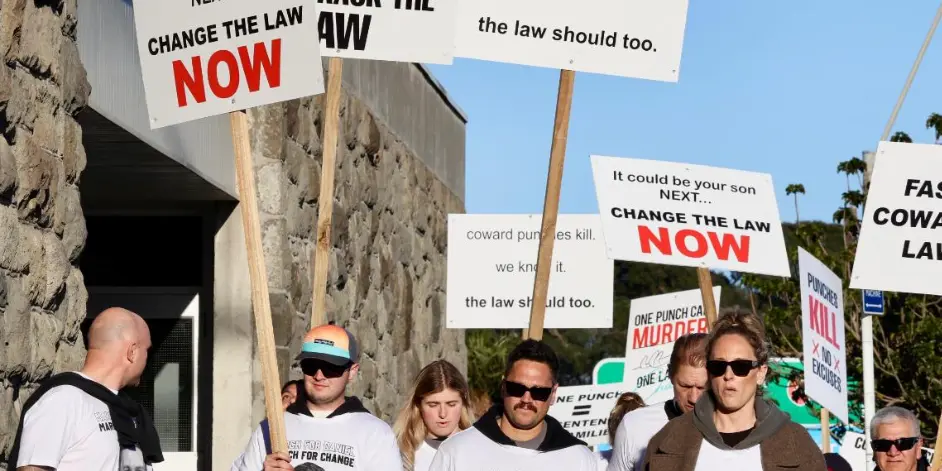
Subject: Submission on Crimes Amendment Bill — Coward Punch killings
I am making a submission on the Crimes Amendment Bill.
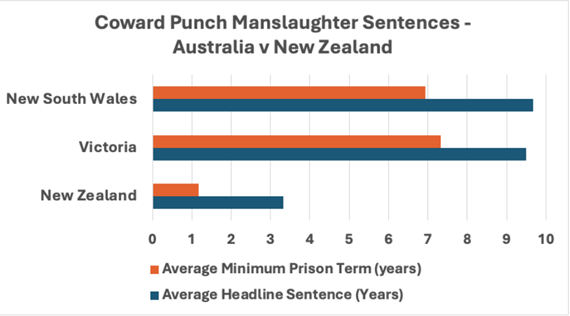
I support stronger consequences for Coward Punch killings, but I am concerned the proposed offence is only a label change and will not increase sentencing outcomes.
If Parliament wants this law to deter Coward Punch killings and deliver justice for victims, it must include a meaningful minimum non-parole sentence.
I urge the Justice Select Committee to amend the Bill to include an 8-year minimum non-parole prison sentence for manslaughter by strike to the head or neck.
Waitangi Day should be a celebration of how this nation came together, our common story, and how remarkably well it’s turned out in the bigger picture.
It shouldn’t be about guilt or grievance. It should not fuel division or redefine history to fit modern agendas.
Back on 6 February 1840, Māori chiefs and the Crown came to a straightforward yet profound agreement: New Zealand as one nation, under one set of laws, with equal rights and protections for all.
That pact delivered order, steadiness, and safety to these islands over the years. It built the bedrock for the New Zealand we live in; a land where folks from every background can raise families, start ventures, and form communities, all playing by the same fair rules.
The Treaty of Waitangi broke new ground by committing to equality before the law. We were building a shared path forward, something unheard of in other places where such pacts weren’t even on the table.
Article III guaranteed Māori the exact same rights as British subjects. Not extra privileges. Not divided setups. Just the same.
That’s why Māori men got the vote in 1867, and when Kiwi women blazed a trail worldwide in 1893, it included Māori women right from the jump. Equality wasn’t some side effect or late addition, it was core from day one.
The Treaty locked in united citizenship.
One government.
One legal system.
One rulebook for everyone.
That’s what made New Zealand stand out, forward-thinking, and able to outperform in just about every arena since.
That’s what made our country great.
Today, those core principles are attacked daily. We are being force-fed nonsense that the nation runs smoother with people treated differently according to race. That equality is “outdated”, and equal status is somehow “unjust”.
I don’t buy that racism, and neither do most Kiwis. It doesn’t line up with our everyday realities.
In real life, we get on with it, not obsessing over skin tone or bloodlines. We live, work, play, and build lives side by side.
I’m disgusted at how our comparatively solid race relations have been hijacked and perverted by activists, activist academics, activist media, activist politicians.
Hobson’s Pledge is here to defend these basic truths of equality.
As Dr Martin Luther King Junior once said: “I have a dream that my four little children will one day live in a nation where they will not be judged by the colour of their skin, but by the content of their character.”
Or, as Captain William Hobson said at the signing of the Treaty of Waitangi: “He iwi tahi tātou, we are one people.”
That powerful statement, that promise, drives us. If you support it too, you can back our efforts to make it a reality.
Activists consistently target us with smears and accusations. Let them come. We fight for equality and against anything or anyone seeking to undo that equality.
Waitangi Day prompts us to think on what we have achieved: a nation grounded in justice, joint accountability, and even-handed treatment.
These values deserve protecting.
If you stand for an equal New Zealand, one land, one people, equal under law, I urge you to mark Waitangi Day. Push politics aside and zero in on what makes this place brilliant.
You can back the cause right now to help us ensure November’s election goes to parties dedicated to a united, equal New Zealand. Pitch in.
This isn’t just history.
This is the legacy we hand our children, and theirs, and theirs.
I wish you, and yours, a proud, peaceful, and thoughtful Waitangi Day.